•
Drizz raises $2.7M in seed funding •
•
Featured on Forbes
•
Drizz raises $2.7M in seed funding •
•
Featured on Forbes

Solutions
Six situations mobile teams are already living with, and what changes in each one.
24,000+
Active Android models to test against
25–50%
Of QA budgets spent on maintenance
1
Test, written once, run on both platforms






1/9
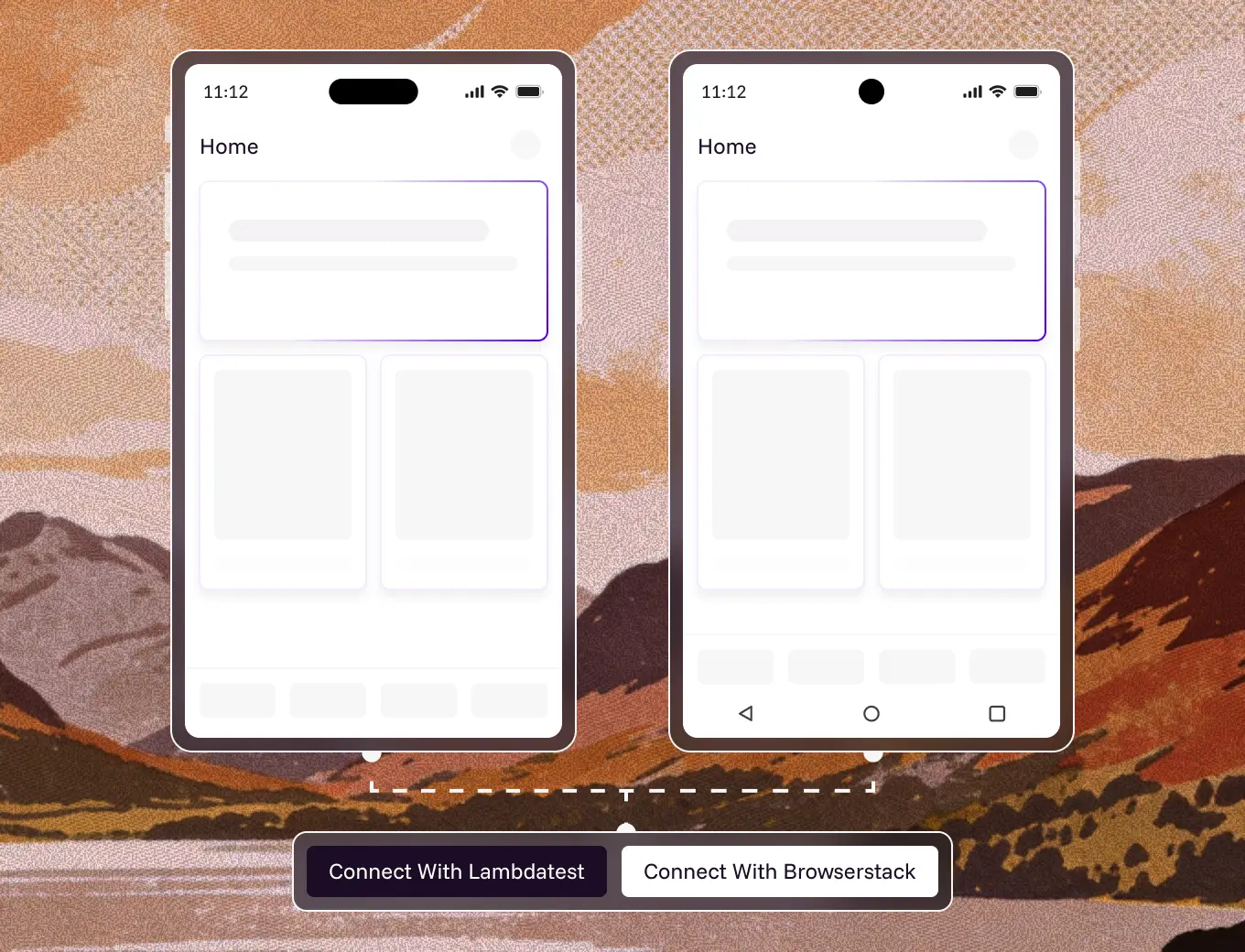
Your manual QAs describe the flow; it runs on Android and iOS. Permissions, gestures and native dialogs are part of the journey, not scripted around.
2/9
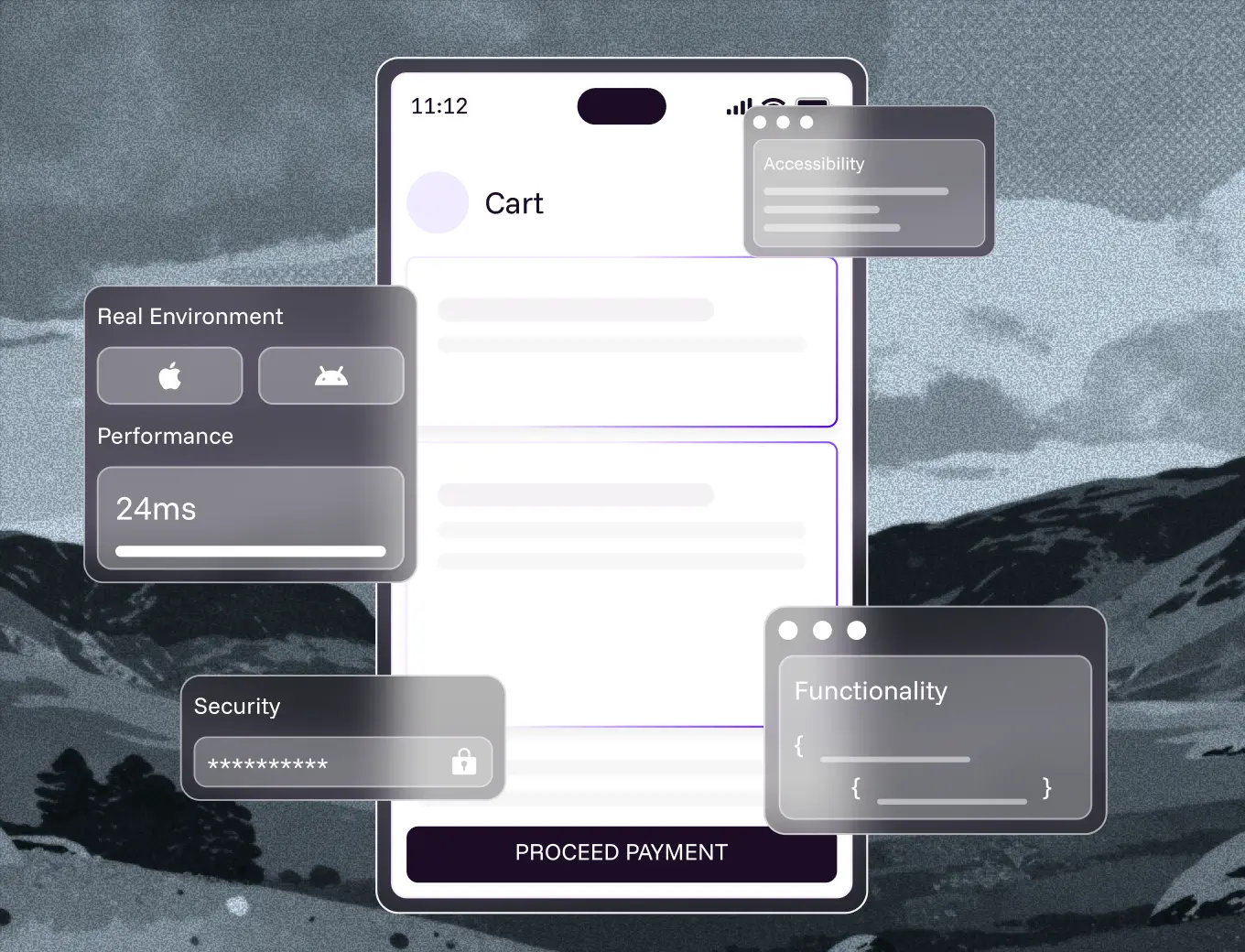
Six OS versions each hold more than 5% share, spread across thousands of OEM skins. The same test runs on all of them instead of resolving differently on each.
3/9
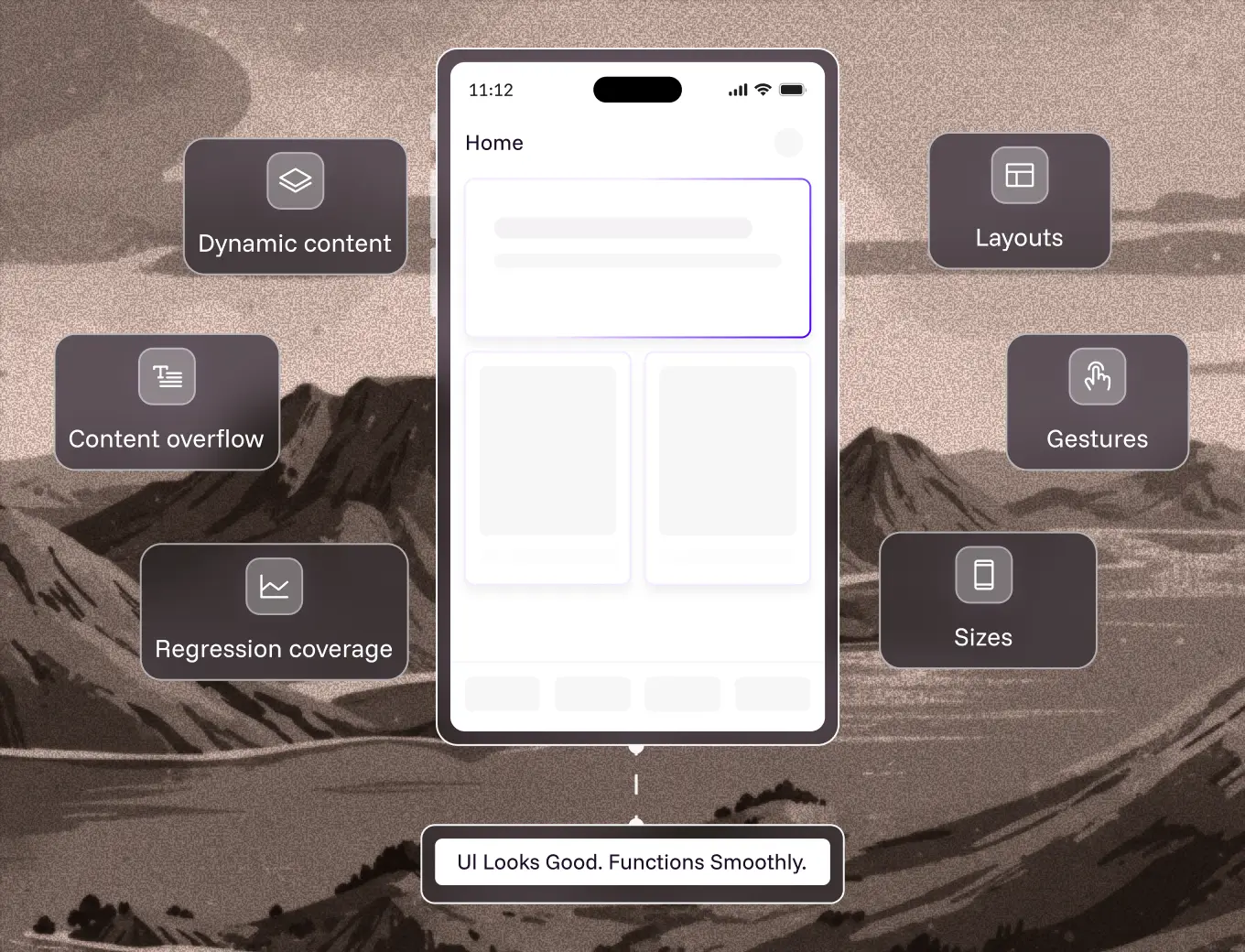
Most devices move to the new iOS within weeks of its September release. The same suite runs against the new version instead of being rebuilt for it.
4/9
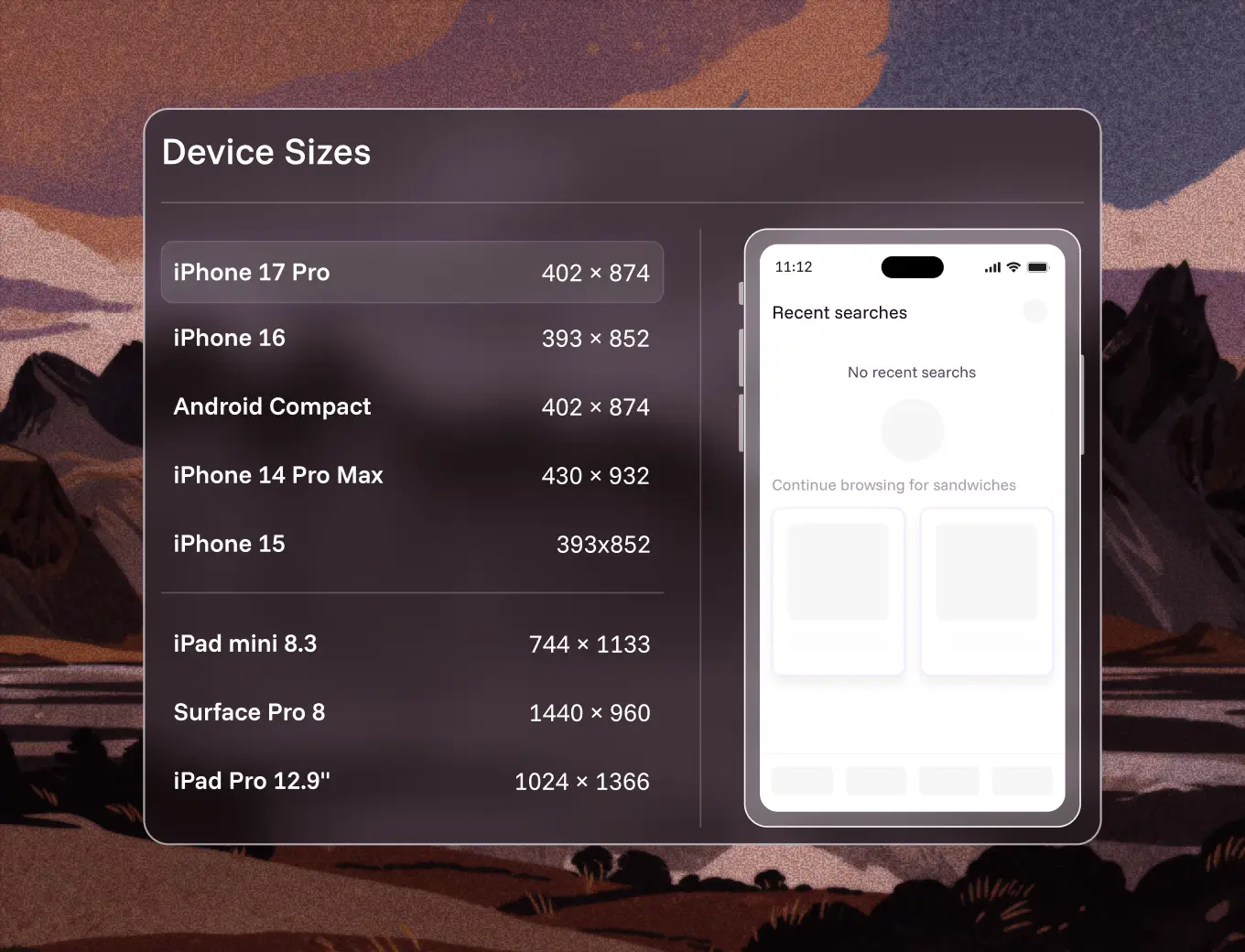
Emulators miss rendering quirks, permission prompts and hardware behaviour. The same test runs on real devices picked from your own analytics, not a generic matrix.
5/9
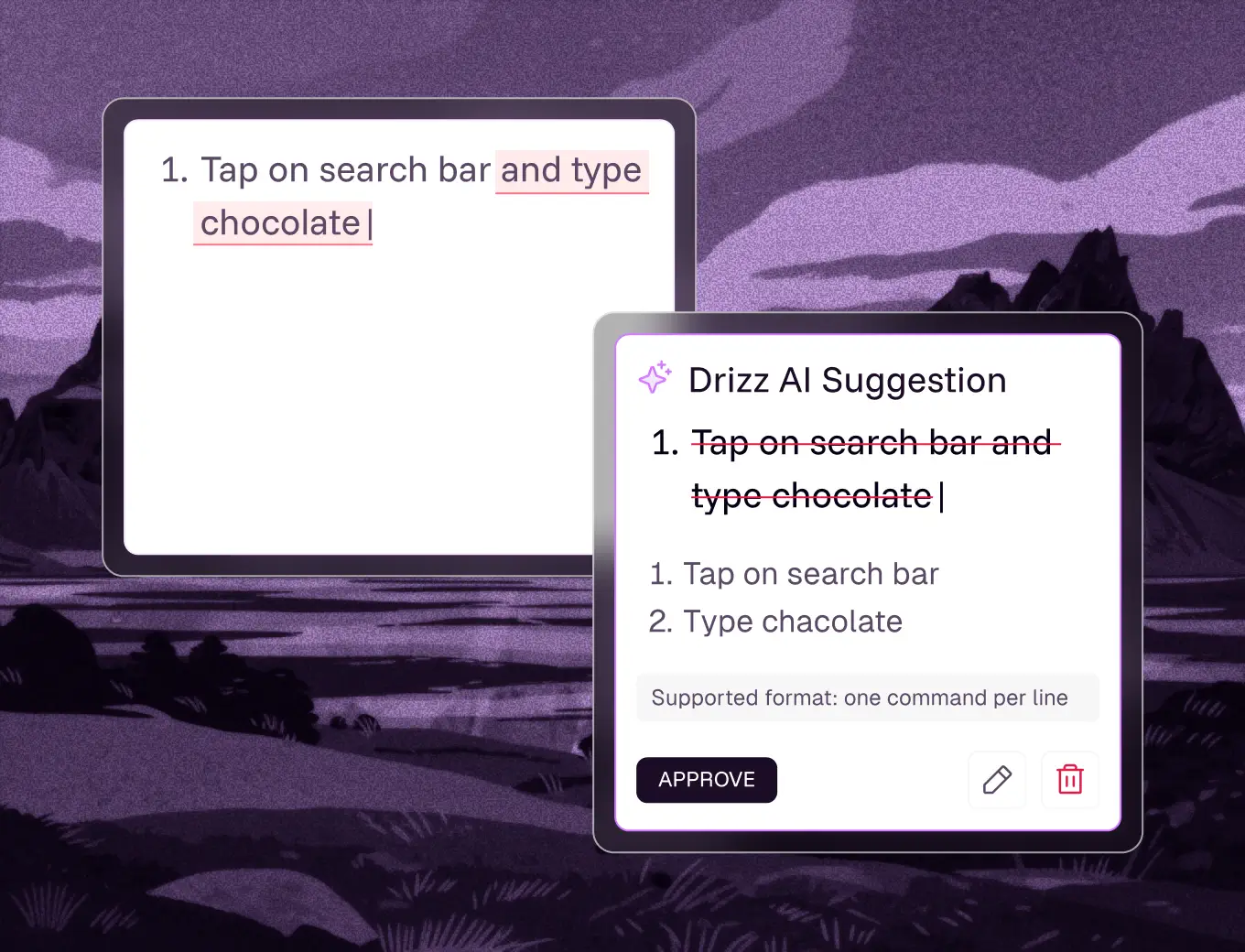
Maintenance takes 25–50% of QA budgets, which is why regression is the first thing cut. Self-healing absorbs the change instead of billing you for it.
6/9
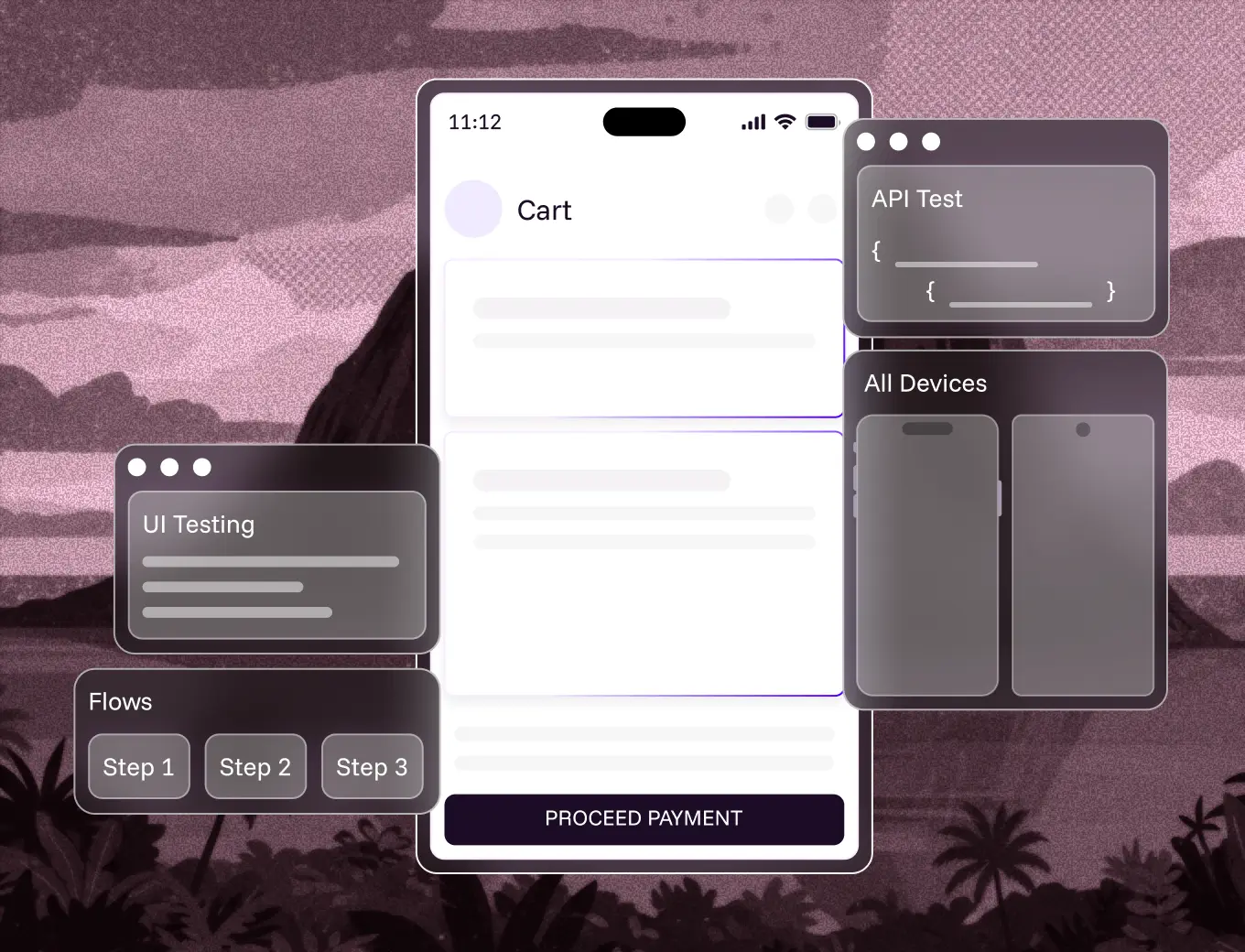
State doesn't carry, a backend call fails quietly, a payment confirms and never settles. Journey validation confirms the outcome, not the final screen.
7/9
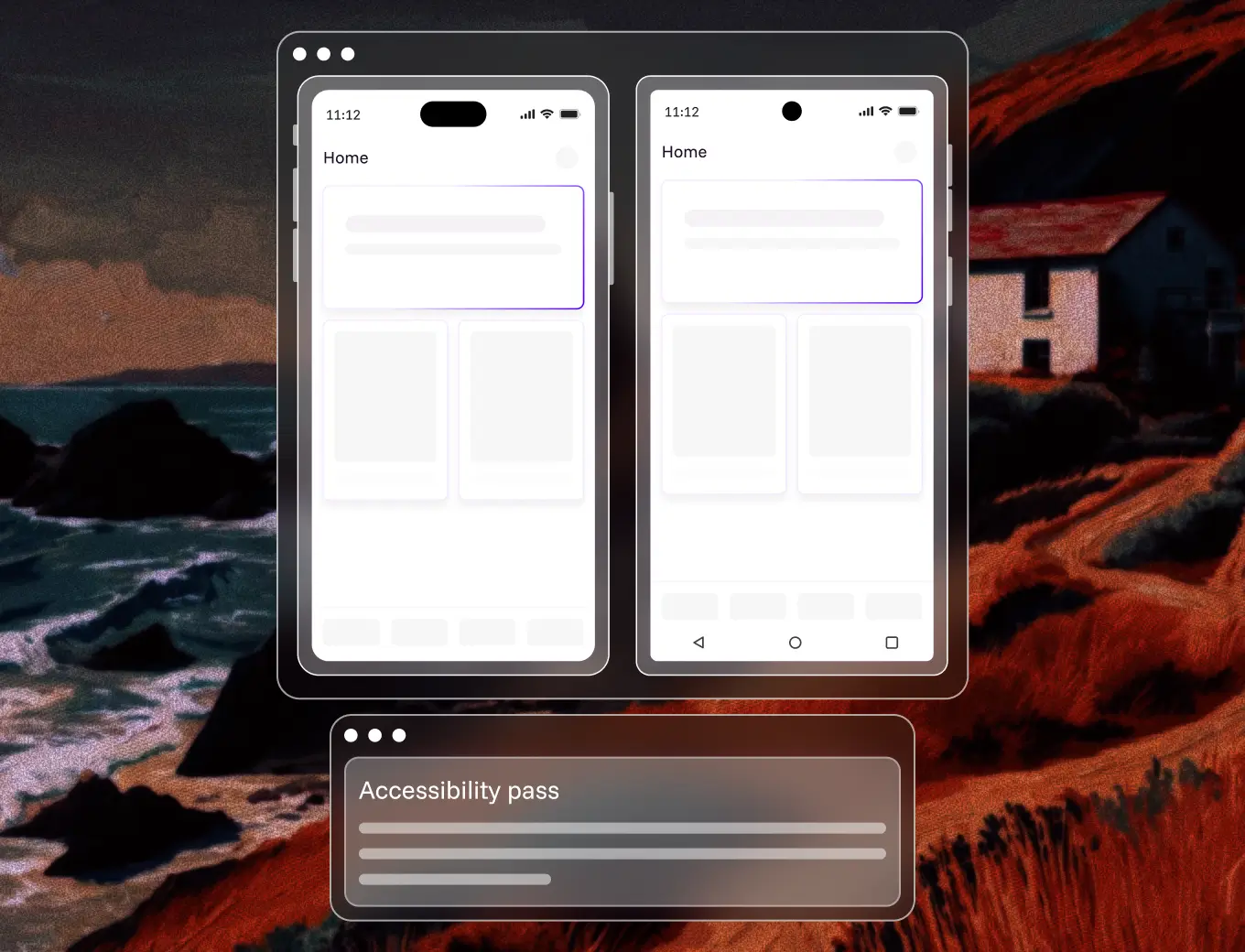
Accessibility is usually a separate audit late in the cycle. Labels, tap targets and focus order get verified on real screens inside runs you already do.
8/9
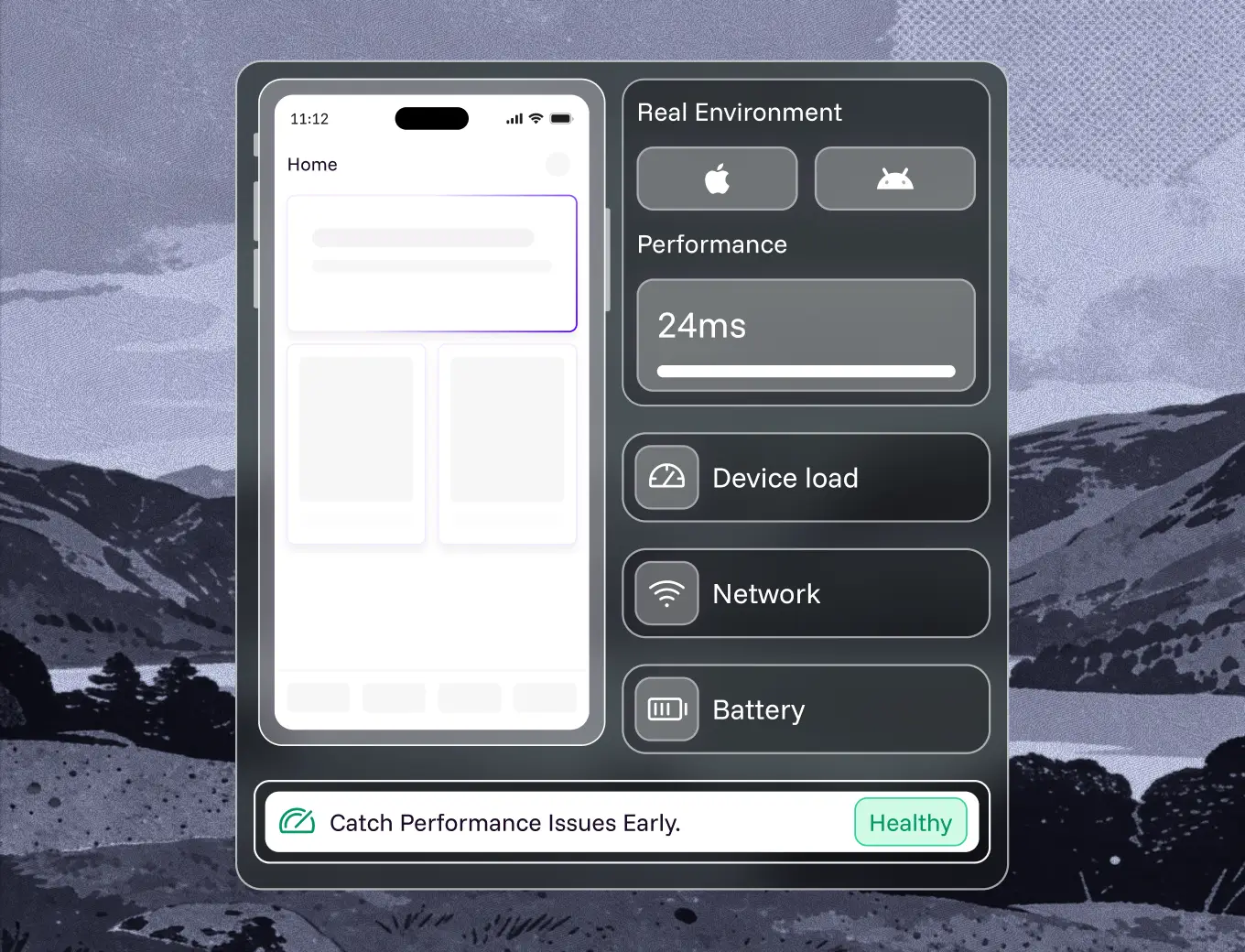
A successful tap doesn't mean it worked. Responses, data and business rules get checked inside the same test, so a correct screen never hides a wrong outcome.
9/9
A clipped button or overlapping label breaks no assertion, every element is technically present. Screens are compared to the baseline every run, across sizes.



©Drizz 2026 • All Rights Reserved